Thursday, December 24, 2009

Santa's Rocket Sleigh

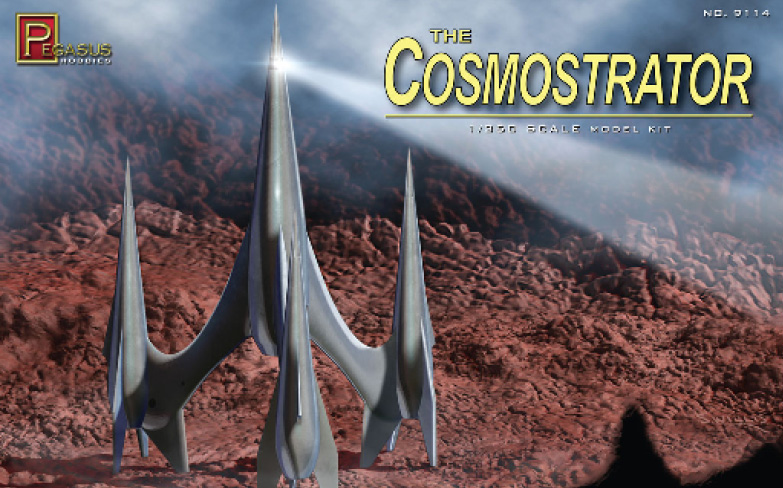
I was a kid during America's "Space Age", which I would define as the period between the launch of Sputnik and the end of the Gemini space capsule launches. Anything to do with space, rockets, and astronauts was hot stuff, especially for young boys like myself. Space helmets, futuristic toy rifles and pistols, astronaut costumes, space-related games and model kits, all were popular, especially at Christmas time. Even Santa Claus joined the space age. I know because I took a ride in Santa's Rocket Sleigh.

It was a few days before Christmas in 1964, and my dad announced that Santa's Rocket Sleigh was coming to the new Greenwood shopping center on Indianapolis' south side. My brother and sisters and I put on our winter coats, piled into Dad's big old Buick, and headed out for a rather strange space-age holiday adventure. It was a cold sunny day, but there had been snow earlier so there were big melting "ice bergs" in the corners of the shopping center parking lot, deposited by the snow plows.

Santa's Rocket Sleigh was parked in the northeast corner of the gigantic parking lot. It was actually a customized bus with a white aircraft-like body, red trim, and big rocket tail fins. The front hatch opened like an old-style airplane entrance, hinged at the bottom so that it folded out-and-down to make a small stairstep entry. I think Santa was somewhere behind the rear of the rocket having a cigarette when I boarded the wierd craft. A woman in a very short Santa's helper dress guided us inside. The "cockpit" was pretty much like that of any city bus, and I remember there were porthole-style windows along both rows of seats.

Without fanfare, Santa entered the rocket, waved HI, and proceeded to drive us around the shopping center parking lot, past the grimy ice bergs of melting snow. The rocket's suspension showed its age, because I remember the ride was bumpy and rough, but I enjoyed it all the same.

After some research I discovered that the rocket sleighs were a travelling attraction in many parts of the United States during those years, even in Alaska. But, sadly, I've not been able to find any photos of this space-age holiday oddity like the one I rode in 1964. The Alaskan version has two booster rockets up top, almost like the space shuttle's, but the rocket sleigh in Indiana was much more streamlined. I did find a photo of the remains of another version, rusting in a junkyard, located by another grown-up rocket sleigh rider who remembers it like I do.

My home state of Indiana has another link to Santa's Rocket Sleigh. The late rockabilly singer Bobby Helms, who lived in Martinsville, Indiana, for most of his life, recorded this odd space-age Christmas song: CAPTAIN SANTA CLAUS AND HIS REINDEER SPACE PATROL. It would have been a great soundtrack for a rocket sleigh full of happy children, eagerly looking forward to the magic of Christmas day.


I wish everyone a very Merry Space-Age Christmas, and a prosperous, safe, and Happy New Year!

VIKTOR KUPRIN

Labels: , , , , ,

Wednesday, November 11, 2009

Back from Hiatus: WindyCon, Astro Boy & MSTS

It’s Veterans Day in the USA. It’s the day when we recognize those who have done service in uniform for their country. Unlike other major holidays in America, businesses don’t exploit it, so it’s celebrated with a few small parades here and there, usually in a low-key fashion. If you know any veterans, it would be nice if you would wish them a happy Veterans Day.


Exactly one year has passed since I last posted a Kosmosflot blog. I’ve been on hiatus, and it was intentional. I’ll explain why. Last year I had the pleasure to be invited to Chicago’s great WindyCon science-fiction convention. The theme was military science-fiction, one of my favorite genres, and I was honored to have been invited as a discussion panel participant, a first for me. The subject of the panel was “Building A Military Science-Fiction Library”, and the panelists and I had lots of fun discussing some of the great authors who’ve written about military service of the future.


But at one of the panels, “Who Gets Military Science Fiction Right … Or Wrong”, one of the guest speakers, a well-known author, made an ugly scene when it was mentioned that military ranks have sometimes been filled by people who had gotten into trouble with the law and, well, sometimes were criminals. I already knew this from history and even from personal experience during my days in the Air Force. I didn’t think this was particularly offensive or disrespectful to veterans. Not so with the big-name author. He stomped out of the room, slammed the door behind him, but then returned to launch an ugly tirade at all of us who were in attendance. His rants and raves went on until I was about ready to leave myself, but he finally exited with another loud door slam, not to return. The other panel members had the good graces to (nervously) resume the presentation.


I won’t mention the author’s name. Perhaps he has emotional issues, maybe even related to his own experience in the military. And more than once I’ve read that professional writers can be cranky, moody, and socially challenged. But having to sit through this ugly and disrespectful tantrum really put me off, and though I very much enjoyed the rest of the convention, the untoward experience was in my thoughts during my drive home from Chicago back to Bloomington, Indiana. Finally I decided to take a break, take some time off from science fiction, and pursue other interests for awhile, anyway. And that’s what I did. Though I couldn’t resist buying Bill Keith’s final installment of his 9-volume Heritage/Legacy/Inheritanance military science-fiction epic: Semper Human, written under his penname Ian Douglas. And during the summer I flew out to Pittsburgh to see Bill at the great Confluence convention, a nice break for me while my family was visiting relatives in Armenia.


My son and I went to see the new Astro Boy movie, and we both enjoyed it. I will date myself by saying that I actually watched the original Astro Boy tv series, in glorious black-and-white, when I was a kid back in 1963. Of course, the new film makes changes from the original story line. Astro’s father, Doctor Tenma, redeems himself in the new film, unlike the original series in which he was just simply a creep, a bad father. In the skewed world of corporate culture, bad dads are not politically correct, I guess. Not so in Japan. But what I missed the most in the new film was getting a glimpse of the gleaming, tech-wonderful world of the future where Astro Boy lived. In the original series, Earth was indeed a planet of “graphite and glitter”, filled with flying cars, high-speed monorails, undersea cities, and wacky terra-forming projects like a colossal dam across the Bering Straits! Not so in the new film. Like in Wall-E, the new Astro Boy’s Earth is pretty much a garbage heap, polluted, trashed, and awful. And only the elite rich get to live in comfort and safety. Oh well, our expectations and our culture changes, right?


One new pastime that I discovered during my hiatus was Microsoft’s Train Simulator, the world of V-scale model railroading. The V stands for virtual, and, yes, there is even a science-fiction aspect to this hobby which I will show you in a bit. Released in 2002, MSTS, as the program is known, is a virtual-world computer simulation of locomotives, trains, and railroads. With it you can be a train engineer, and simulate the experience of running trains of various types and sizes through routes, simulated rail lines. MSTS is enough of an open system that third parties can create locomotives, rolling stock, and even entire railroad routes, but doing so requires considerable computer and artistic skills. In fact, to really enjoy MSTS and other V-scale software, you must be computer-savvy. Installing software, upgrades, patches, along with debugging and editing configuration files is mandatory, so one must also have computer skills to master this hobby.


There is an amazing library of free add-ons for the program via The Internet. My own collection of downloads now exceeds 67 gigabytes, more than enough that I will ever use in my lifetime, I’m sure. Railfans all over the world have created their own favorite locomotives and routes for MSTS, and though Microsoft shutdown development of MSTS version 2 due to the economic crunch, support for this 7-year-old software program is just amazing, mostly due to its loyal followers.


You can get a look at what MSTS is about by watching some of the great At The Railyard videos on YouTube.


And the science-fiction angle? Well, the first time I ran a train on the Pennsylvania Railroad route, I saw a trackside factory named "Klingon Lawn Furniture Company". And take a look at this James Bond-inspired chase, a very hacked video that showcases the popular fantasy route called Sea View Island. Weapons, explosions, and flying trains are not a part of MSTS. Those were added to the video for fun, but you will see the amazing Sea View Express turbine-powered trains. They’re great fun to run, some of my favorites.


Well, for better or worse, I’m back. A couple of people noticed my absence and were kind enough to write during my hiatus. To them I say, thanks very much for asking about me. This blog amazes me by the large number of readers that keep coming every week, and by their world-wide locations. My most popular posts are the ones about Ded Moroz, the Russian Santa Claus; the War of the Worlds post; and the Science Fiction For Kids entries. So what the heck, maybe I’ll write some more!


All the Best,


VIKTOR KUPRIN

Labels: , , , , , ,

Tuesday, November 11, 2008

Science Fiction for Kids: The Adventures of Thelonious

"In ancient times human beings ruled the Earth -- at least that's what the old legends claim. But is it true?" - Thelonious Chipmunk, from The Travels of Thelonious

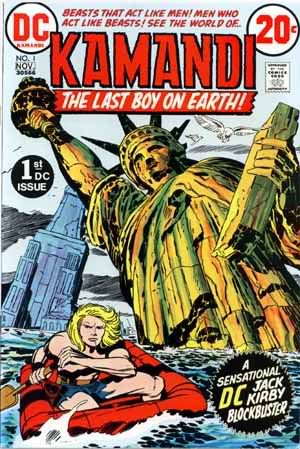
It’s a familiar theme for science-fiction fans: all civilization and the entire human race is destroyed by conflict or disaster. Then intelligent animals arise to dominate the world. But soon those new masters of the Earth begin making the same mistakes as their human predecessors. Of course, The Planet of the Apes is probably the most famous example of such stories, the novel and both the original 1968 film starring Charlton Heston (co-authored by Twilight Zone’s Rod Serling) and the crazy-fast-action Tim Burton remake of a few years back. Comic book fans may also recall Jack Kirby’s long-running DC series Kamandi – The Last Boy On Earth, where "Beasts Act Like Men! Men Act Like Beasts!"

Strangely enough, the post-human era is presented once again, this time in a wonderful trilogy of children’s books by Jon Buller and Susan Schade: The Fog Mound adventures. It’s first-class science fiction for children, though I should mention that there are some scenes of cruelty and violence between the animal characters, and, in the third volume, Thelonius and his friends have a frightening encounter with Upsilon the Wolfman, and must listen to the “crunching of small bones” as the scary beast and his companions dine. However, throughout the stories the animal characters display real compassion and loving care towards each other, and they often reminded me of the rabbits in Watership Down, another favorite "furry" book.

But be warned: As I found out, these books are so good that if you read them to children at bedtime, as I did for my son, Ronnie, they will not want to go to sleep. They will beg you to keep reading and reading these fascinating adventures.

In the first volume we meet the story's hero, Thelonious Chipmunk.

Thelonious Chipmunk is a Talker -- an animal who has inherited the gift of language from his ancestors -- and he, for one, believes in humans. Who else could have made the old paper postcard he treasures? Who else could have built the tall building shown on the postcard? His desire to know more about the humans is fulfilled in a surprising and dangerous way when Thelonious is swept down the river into a strange new world -- a world of architectural ruins and puzzling artifacts, where gangs and warlords prowl amongst the crumbling remains of civilization. With three new companions -- a bear, a porcupine, and a small brown lizard -- Thelonious embarks on a search for the far-off Fog Mound. It is a journey that becomes nothing less than a quest to uncover the secrets of Earth's past.

After living on the Fog Mound for quite some time, Thelonious Chipmunk and his friends are ready to continue their travels. There are some old questions to be answered and new places to be explored. So, with the addition of new friends Bill the Human and Cluid Chipmunk, the animals sail off down the river in a specially designed boat. As in The Travels of Thelonious, the intrepid chipmunk pursues his personal quest to uncover the differences between legend and history. And to answer the most troubling question of all — what happened to the humans?

Thelonious Chipmunk and his friends face a whole new series of adventures after they reach the mysterious Mattakeunk Institute and discover . . . a time machine! Will the time machine lead them to the answers they seek? Perhaps some of the answers will come when the animals' traveling companion, Bill the Human, regains his ability to speak. However there is one pressing need above all others -- the need to save their beloved Fog Mound from the Dragon Lady herself, and her evil ratmink assistants.

-quoted from Simon and Schuster Books for Young Readers


D’os Vadanya,

VIKTOR KUPRIN


Technorati tags: , , , , , , ,

Labels: , , , ,

Sunday, November 09, 2008

WindyCon, Building a Military SF Library, and Freehold

Next weekend I will be attending the WindyCon 35 science-fiction convention in Chicago. The event’s theme is military science fiction, and Baen Books’ John Ringo is the guest of honor, along with author Eric Flint, Star Trek’s and Babylon 5’s Walter Koenig, and artist David Mattingly.


I’m a Cold War veteran, and I spent most of my hitch in the Strategic Air Command’s 22nd Heavy Bomber Wing. And like most veterans, I learned pretty quickly that the old adage that advises “Don’t volunteer for anything!” is essential unless you want to subject yourself to dreadful humiliation or great risk. So, when I logged on the WindyCon site to make some suggestions for panel discussion topics, I had no idea that I was, in fact, volunteering to be a panel member. But that’s what happened, and I’ll be participating in the panel about Building a Military SF Library - What are the great books of military SF? What does any aspiring military SF writer need to have in a reference collection? Panelists tell you.

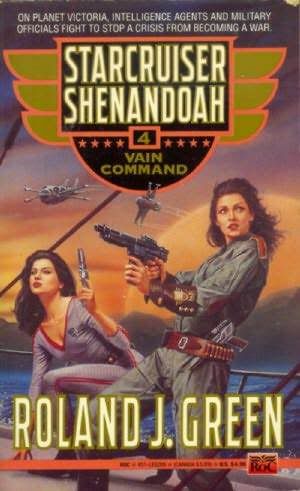
The session is scheduled for Saturday at 7 p.m., Nov. 15, in Ballroom C (C6, to be exact). While it’s a totally unexpected privilege for me, and my first time to be on a convention panel, I’m very honored and happy that Roland J. Green, the author of some of my all-time favorite military science-fiction series (Starcruiser Shenandoah, The Peacekeepers) will also be a panel participant.

On Friday evening I don’t want to miss the panel discussion titled Liberal Military SF: Does It Exist? - Can a writer be a liberal and a military SF writer? Is there something in military SF that requires a conservative outlook? Not counting the revolutionaries, are there any good portrayals of liberals in the genre?

Somehow I’m not surprised that Michael “Mad Mike” Z. Williamson will be a panelist on that one. Mad Mike almost got me in trouble in 2005 while I was living in Armenia. I was enjoying myself in an Internet café in the capitol city of Yerevan and, thanks to the Baen Free Library, I came across Williamson’s first novel, Freehold. To be generous I will just say that I didn’t like it much. The libertarian paradise it portrayed was as unbelievable to me as any Soviet propaganda about a future world of “pure communism”. But that’s not what almost got me into an unpleasant situation. The adult content in Freehold did. In fact, I think Williamson went way, way beyond erotica and crossed the line into pornography with his detailed descriptions of lesbian and group sex acts by the novel’s characters.

And, in Armenia, possessing, reading, and downloading pornography can get you into big, big trouble. Trouble like the interior of an old Soviet prison cell. And, quite frankly, I didn’t expect content like that when I started reading the story. Baen’s other online stories contain nothing like what I saw in Williamson’s book.

Lucky for me, the Internet café proprietors and their up-stream service providers didn’t detect the lewd text and, yes, they do monitor and sometimes block adult content in Armenia and in many of the other post-Soviet Republics. No militsia thugs wearing big CCCP service caps appeared to beat me up, extort money, or haul me to KGB headquarters. But it did put me off of reading any more of Williamson’s books. I’ve seen his comments that say “It was my first novel. I’ve learned a lot since then,” but, on his own website, his response to the subject of the controversial sexual content in Freehold is pretty flip.

I got a bad feeling, too, about such sexually explicit content being available on Baen’s online library with no warning, no disclaimer, no parental advisory, and, as a parent, that gives me the creeps.

Earlier this year, at Dayton’s Marcon sf convention, I told Baen publisher Toni Weisskopf about my experience in Armenia and my concerns. She urged me to give Mad Mike another try, to read some of his later work, but first impressions are lasting ones. And I have too many good books from other authors on my to-read list, thank you all the same.

Until next time, D’os Vadanya,

VIKTOR KUPRIN

Labels: , , , , , ,

Sunday, October 26, 2008

The War of the Worlds - An American Halloween Tradition

In the First World War, and for the first time in the history of man, nations combined to fight against nations using the crude weapons of those days. The Second World War involved every continent on the globe, and men turned to science for new devices of warfare, which reached an unparalleled peak in their capacity for destruction. And now, fought with the terrible weapons of super-science, menacing all mankind and every creature on the Earth comes the War of the Worlds!

Autumn is here and Halloween is nigh. And for science-fiction fans, one very American tradition during "All Hallows' Eve" is H.G. Wells' classic novel of alien invasion, The War of the Worlds. Seventy years ago, on October 30, 1938, the late, great actor and film producer/director Orson Welles and his Mercury Theatre On The Air played one heck of a trick-or-treat with their radio dramatization of the story, causing panic and alarm across the United States. Using a "we interrupt this broadcast to give you an important announcement" newscast style, Welles and company made many people believe that Martians (or perhaps Germans) were actually attacking. Newspapers of that era, hostile to the upcoming broadcasting industry, played up the unintentional effects of the broadcast, and there were many unsubstantiated, anecdotal accounts of people preparing to commit suicide rather than risk death from Martian heat rays or poison gas attacks. But there were very real accounts of genuinely frightened citizens, flooded telephone switchboards, and some people actually getting their firearms ready to defend their homes and communities. The next day a very shaken Orson Welles had to explain that the resulting panic was unintentional, and CBS made a public promise to never again use the words "We interrupt this broadcast" in any future entertainment program on radio.

In the early 1960's my father was a sometimes attendee at meetings of the Indiana Recording Club, whose members used big reel-to-reel tape recorders to copy and swap many old radio programs from the 1930's and 40's. I had the rare privilege of hearing Orson Welles' War of the Worlds when I was a kid, though the third-generation recording was pretty awful in quality. Modern digital technology has greatly improved existing recordings of that historic broadcast. You can hear it online at the Internet Archive:
http://www.archive.org/details/WAROFTHEWORLDS2

The latest version of The War of the Worlds was Steven Spielberg's 2005 film, which I first saw while in Armenia. My teenage nephew from Moscow, Serosha, and I celebrated the 4th of July by going to the small digital theater in Vanadzor to see a Russian-dubbed version. Spielberg took ample liberties with the original story, many of which just didn't work for me, like the Martian war machines being buried long-ago under the earth as weapons caches. And the appearance of the Martians themselves was disappointing, rather like diminished versions of the Independence Day aliens. But there are some very effective scenes in Spielberg's film, my favorite being the first appearance and ascension of the Martian tripod war machine in the town square. Harkening back to the original Wells' steampunk-like machine, the towering invader emits puffs of steam-like gas, and slowly shifts its weight on its three metal legs. As Tom Cruise and the downtown crowd start to come out of their hiding places to get a better look at the amazing sight, again as in Wells' original story, the Martian war machine exhults, blasting sinister music-like basso profundo notes the likes of which I haven't heard since I attended a Black Sabbath concert some years ago. Everyone on screen jumps when the machine unexpectedly sounds off, and I confess that it made me feel a real chill up my spine.

I enjoyed Spielberg's film, uneven though it was, but my all-time favorite is George Pal's 1953 Oscar-winning version of The War of the Worlds, certainly one of the very best science-fiction films made in the 50's. The film was directed by Byron Haskin, who would later direct another of my favorite science-fiction films, Robinson Crusoe on Mars. In Pal's film, the invasion takes place during the 1950's. Pal and art director Albert Nozaki placed the Martians in sleek, futuristic manta-ray shaped war machines that hovered above the ground on invisible legs of magnetic flux. Modern science-fiction elements were added to the plot with great effect, such as the Martians generating atomic energy "without the heavy shielding we use" as the source of their weapon's power. Radioactivity is detected not long after the first Martian cylinder falls from the sky, an ominous omen of what is soon to come. When the Martians first shoot their atomic-powered heat ray, an electronic-magnetic pulse knocks out electric power, telephone lines, and even magnetizes the watches worn by the nearby towns' people. And though Pal didn't use tripod war machines in his film, the trinary nature of the Martians was emphasized throughout the story: the Martians are shown to have three fingers; their eyes and electronic cameras have three irises that are colored red, green, and blue; and the Martian war machines always operate in groups of three.

The film begins with a virtual tour of the solar system, beautifully illustrated with the artwork of Chesley Bonestell, the famous space illustrator. And the accompanying narration was done by Sir Cedric Hardwicke, whose British accent is most fitting for this retelling of Wells' story. One of the first scenes is a view of a Martian city alongside frozen water canals. I always yearned to see a close up, but we only get a distant view.

The stars of the film were Gene Barry in the role of Pacific Tech scientist Dr. Clayton Forrester, and the very beautiful Ann Robinson, who was only 17 years old at the time! Barry would later be remembered for his starring roles in the TV western series Bat Masterson, and in following years as the lead role in Burke's Law. Some reviewers are critical of Barry's acting, but I enjoyed his performance in The War of the Worlds. You can hear a little bit of mad scientist in his voice as he's watching the Martian war machines slowly rise up from their landing zone and gleefully whispers, "This is amazing!" I thought so, too, when I first saw the silvery Martian machines. During the initial Martian attack, Barry and the commanding Army officer, General Mann, see the Martian's disintegrating "skeleton beam" for the first time. Barry really got me when he grabs General Mann and desperately explains:

"It neutralizes mesons somehow. They're the atomic glue holding matter together. Cut across their lines of magnetic force and any object will simply cease to exist! Take my word for it, General, this type of defense is useless against that kind of power! You'd better let Washington know, fast!"

Major General Mann was played by Les Tremayne, whose career in radio, television, and film spanned over 50 years. His performance as the frustrated commander of the futile west coast defense efforts against the Martians is dead on. While serving in the U.S. Air Force, I met more than one General Mann in my time, believe me! In one of my favorite scenes, Mann is shown briefing the U.S. Secretary of Defense and a team of military commanders from around the world:

"This much is certain. It is vital to prevent the Martian machines from linking up. Once they do, they adopt an extraordinary military tactic. They form a crescent. They anchor it at one end, sweep on, until they've cleared a quadrant. Then they anchor the opposite end, and reverse direction. They slash across country like scythes, wiping out everything that's trying to get away from them."

Mann shows detailed photographs of the original Martian landing zone, now developed into a full-fledged base. Finally, after a silent pause, the Secretary of Defense nods thoughtfully and says:

"All right, I've seen enough. There's only one thing that will stop the Martians. We've held back because of the dangers of radiation to civilians. Now we have no choice. The White House will confirm the order to use the atom bomb."

Pal selected a perfect symbol of the 1950s jet-age era in his film when he used footage of the Northrup YB-49 Flying Wing jet aircraft as the bomber chosen to drop the A-bomb on the Martians. Though the plane was way ahead of its time and was never put into production, seeing the big wing as the last hope for civilization was a great touch for the film.

There has been some criticism of the religious elements in Pal's film, but I always thought they were done tastefully and display a touch of compassion in such a grim story. When the Martians' first landing zone is surrounded by Marine and Army forces, the nearby town priest, Father Matthew, played so very well by actor Lewis Martin, pleads with the military commander to make an effort to show that we mean the Martians no harm, that war is not necessary. Unsuccessful, Father Matthew quietly slips away from the command post and sets out toward the advancing Martian war machines on his own. He recites the Lord's Prayer as he walks, and holds up a pocket bible to show the Martians the cross on its cover. This scene always impressed me greatly because we can see the fear on Father Matthew's face, the knowledge that he is, indeed, walking through the valley of the shadow of death, but that his Christian faith compels him to make the effort.

Another scene, a brief one that always touchs me is when Gene Barry is desperately going from church to church looking for Sylvia as Los Angeles comes under direct attack by the Martians. Inside the churches we see the elderly, the poor, and, many times, immigrants whom I always imagined didn't have automobiles and couldn't flee from the oncoming menace. Not finding Sylvia in a Catholic church, Barry turns to leave but is stopped at the door by a kindly church elder who says, "Don't go, son. Stay here with us." It's a minor scene, but this simple, compassionate moment is one that stands out in the movie, for me anyway. It's clear that the refugees in the church believe they will soon be killed, and that the elder's kind invitation really means, "Don't die out in the street alone." A dazed Barry quietly explains how he's searching for someone and then moves on through the burning streets as the Martian machines enter the city.

In another scene touching on religious faith, just before the A-bomb is dropped on the Martians, a scientist tells Barry and Robinson that he's calculated that the Martians will be able to conquer the Earth in six days. Robinson replies, "The same number of days it took God to create it." The group of scientists pauses in quiet reflection at this very chilling biblical reference.

George Pal paid tribute to Orson Welles' 1938 War of the Worlds broadcast by including cameo appearances in his film of characters from Welles' script. At the first Martian landing zone, a radio station reporter named Carl Phillips describes the scene for radio listeners, just like in the radio play. And later, again on radio, a scientist named Drew Pearson, the name of Welles' character in the original broadcast, makes comments about the possible physical appearance and nature of the Martians.

Director Byron Haskin and art director Nozaki worked together again in 1963 on another outstanding Mars film, Robinson Crusoe on Mars. And if you watch it, you will see Nozaki's original Martian machine design, recycled but without the cobra-like heat ray, this time as the supersonic, automated machines used by the interstellar miners on the Red Planet.

The 1938 War of the Worlds broadcast is sometimes replayed on radio during Halloween, and many radio stations and theater groups perform new versions of the story at this time of year. But if you'd like a real science-fiction treat for this All Hallow's Eve, I urge you to watch the 1953 film version.

Happy Halloween,

VIKTOR KUPRIN

P.S. Earlier this year when I was visiting Armenia again I took my DVD of George Pal's War of the Worlds. It had never before been shown in the Soviet Union. At the end of a screening of the film for families and neighbors, I heard the Armenians saying "Grip. Grip," the Armenian word for influenza! If you read the book or watch the films, you'll know why.

Technorati tags: , , , , ,

Labels: , , , , , , ,